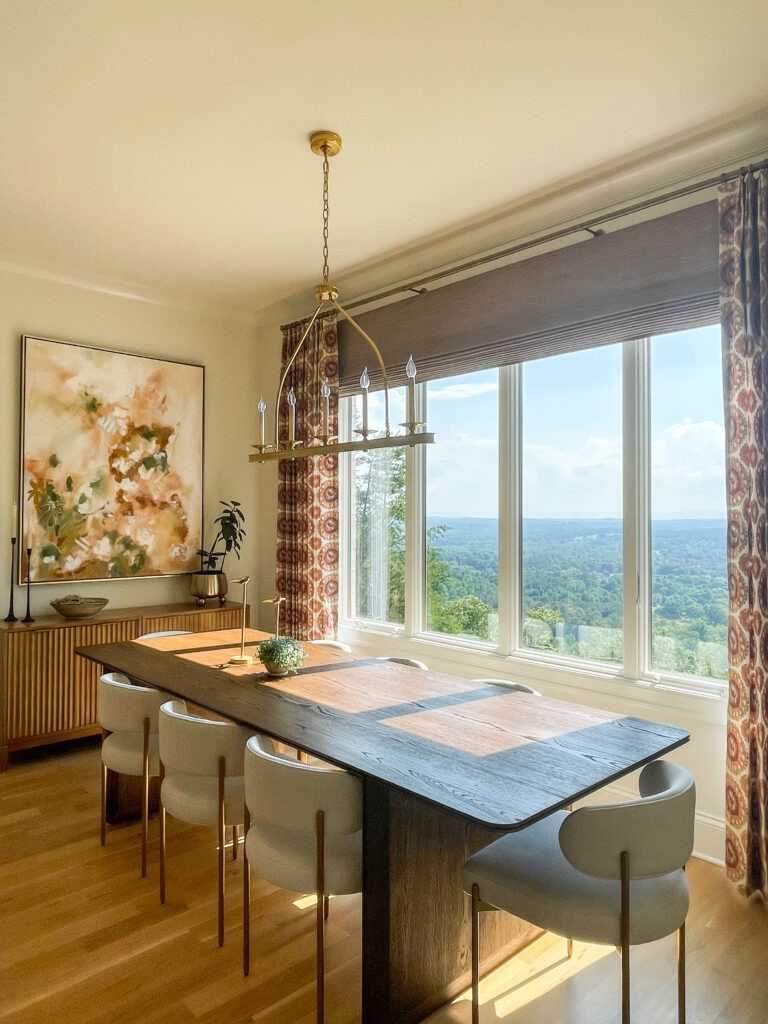
The pleat at the top of a drapery panel decides how the whole thing hangs. Here’s how I help Chattanooga clients choose.
When a client shows me a photo of a room they love, it’s often the draperies that caught their eye, and more specifically the way the fabric gathers at the top. That top edge is called the header. The same linen can look like an English country house or a downtown loft depending on the header we choose.
Pinch Pleats and Euro Pleats
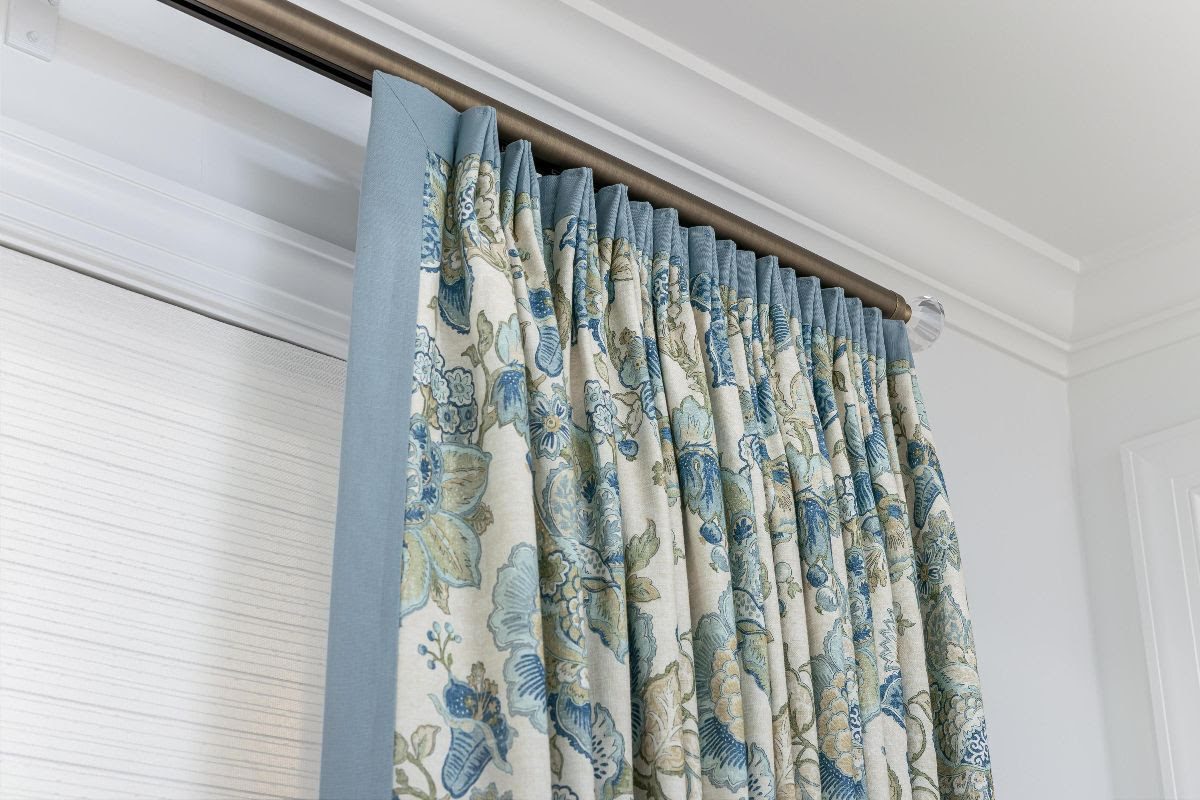
A pinch pleat gathers fabric into two or three folds tacked together a few inches below the top, so the folds fan out above the tack and fall straight below it. It’s the classic choice for traditional living and dining rooms, and it hangs well from rings on a decorative rod or on a traverse rod for windows you open every day.
A Euro pleat tacks the folds at the very top instead, which lets the fabric open out softly below. I love it for the look I call Modern Romance, where classic bones meet a lighter hand. In a washed linen or a soft velvet, a Euro pleat feels relaxed and still looks custom made.


A Euro pleat gathers fabric only at the top, so the panel falls loose and full below. It brings softness without making a room feel fussy.
Goblet and Inverted Pleats for Formal Rooms
A goblet pleat forms a rounded cup at the top of each fold, and it’s the most formal header I use. Opening and closing will crush those cups, so I put goblets on stationary panels. A few years ago we layered goblet-pleated sheers over custom shutters in a dining room, and that room still looks exactly the way we hoped it would.
An inverted pleat tucks its fold behind the header so the front stays flat and tailored. It sits beautifully under a cornice, and I like it in a study or bedroom where you want structure without much fuss.

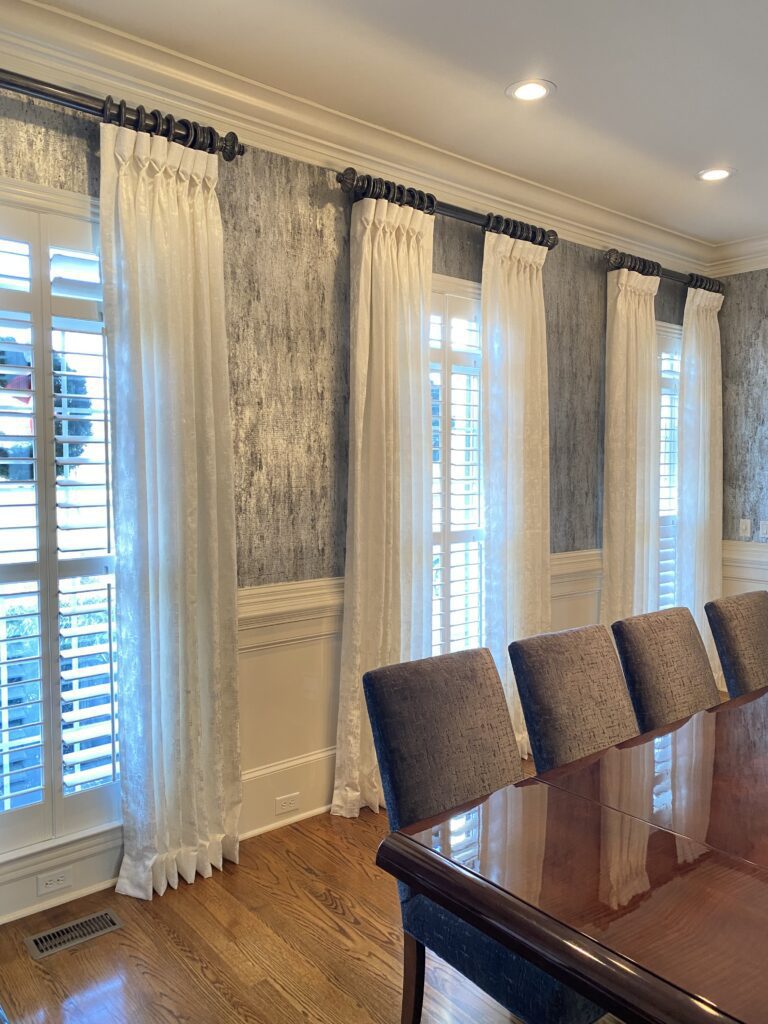
Goblet pleats hold their rounded shape best on panels that stay put. Paired with shutters for privacy, they frame the windows and add height and formality to this dining room.
Ripplefold for Modern Homes and Wide Windows
For a contemporary home, I recommend ripplefold almost every time. The fabric snaps onto carriers in a track and forms soft, even waves with no pleats or rings in sight, and the panels stack back tightly when open.
That makes ripplefold a natural fit for the sliding doors and long walls of glass in many newer Chattanooga homes. I often recess the track into the ceiling so the fabric seems to fall straight from above, and it pairs well with motorization. I wrote more about it in my post on ripplefold draperies.

Let’s Find the Right Pleat for Your Home
You don’t need to know any of these terms before we meet. Save the rooms you love, and I’ll help you put a name to what’s drawing you in.
When I come out, we’ll look at your windows and how the light moves through each room, and I’ll bring samples so you can see the fabric in person. Reach out here and we’ll find a time.

Drapery Header FAQs
What is the difference between pinch pleat and Euro pleat draperies?
A pinch pleat tacks its folds a few inches below the top, so the fabric falls in crisp columns. A Euro pleat tacks them at the very top for a softer, more tailored look.
Can pleated draperies be motorized?
Yes. Ripplefold and pinch pleat draperies on a traverse system can both be motorized, so they open and close with a remote, a wall switch, or your smart home system. Goblet pleats stay stationary, so they don’t need it.
How much fabric do custom pleated draperies need?
Most custom draperies use two to three times the width of the window in fabric, depending on the pleat style.
Are grommet curtains or pinch pleat draperies better for a formal room?
Pinch pleats suit a formal living or dining room better. Grommets show metal rings along the top of the panel, which reads casual. My drapery hardware guide covers the rod options that pair with each style.
Can goblet pleat draperies open and close?
Goblet pleats work best on stationary panels, because opening and closing them crushes the rounded cups at the top. I pair them with shades or shutters for privacy.
How long do custom draperies take in Chattanooga?
Plan on eight to twelve weeks from order to install, so a project we start in November will typically be hanging in your home by late winter.